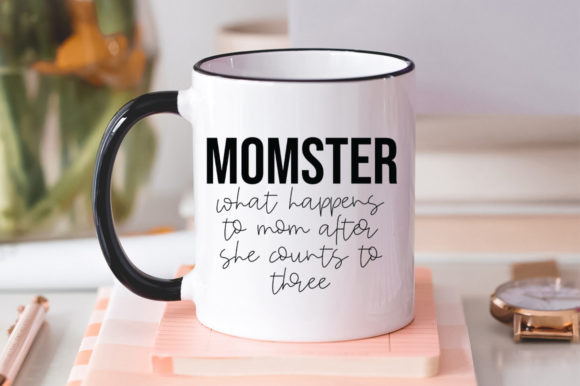
Momster What Happens to Mom Svg: A Designer Review
As a professional embroidery digitizer and product reviewer, I approach every new graphic asset with a specific question: will this actually stitch out well on fabric? When evaluating the Momster What Happens to Mom Svg, my assessment goes far beyond the screen. While this digital download is primarily marketed for cutting machines like Cricut, its bold typography and humorous sentiment make it a prime candidate for adaptation into a machine embroidery design. For Etsy sellers, craft business owners, and makers creating custom apparel, understanding how this graphic translates from vector to thread is essential for producing a high-quality finished product.
First Impressions: Humor Meets Stitchability
The immediate appeal of the Momster What Happens to Mom Svg lies in its relatable, tongue-in-cheek personality. It captures a specific mood that resonates deeply with modern mothers, making it an excellent choice for personalized gifts or boutique merchandise. Visually, the design features chunky, distressed lettering that suggests a casual, lived-in aesthetic. From a digitizing perspective, this is advantageous. Bold, solid shapes are generally more forgiving than intricate script when converting to stitches.
However, the "distressed" texture seen in the PNG and JPEG previews requires careful consideration. In embroidery, we cannot simply print pixels; we must recreate that texture through stitch density and placement. If you are using this file as a template for digitizing, or if you are applying it as a vinyl layer alongside embroidery, you must decide whether to replicate the grunge effect with complex fill stitch patterns or to simplify the design for cleaner production. For a sweatshirt embroidery project, simplifying often yields a softer hand and better drape, whereas maintaining the distress can add visual interest but increases stitch count significantly.
Real-World Application: The Custom Sweatshirt Test
To truly evaluate this asset, I mentally placed it in a real-life production scenario: creating a unisex crewneck sweatshirt for a Mother’s Day pop-up shop. This is a classic use case for small shop product lines. The phrase "What Happens to Mom" demands visibility, so I envisioned a center-chest placement roughly four inches wide.
In this context, the Momster What Happens to Mom Svg performs exceptionally well as a focal point. The blocky nature of the font allows for clear readability even from a distance, which is crucial for commercial embroidery intended for retail. When adapting this for needle and thread, I would recommend utilizing a combination of satin stitch borders and tatami fills. This structure provides stability on knit fabrics, preventing the puckering that often plagues custom apparel projects. If you are combining this SVG with cut vinyl, the provided DXF and EPS files ensure clean cut lines for mixed-media applications, allowing you to offer a premium multi-texture handmade product.
Navigating Fabric Challenges and Hoop Limitations
While the design is versatile, it is not without limitations. As an experienced designer, I must caution against using highly detailed versions of this graphic on unstable substrates. If you are attempting a tote bag design on loose-weave canvas or a baby embroidery project on stretchy jersey, the distressed elements of the Momster What Happens to Mom Svg can become problematic. Small gaps in the lettering may get lost in the fabric texture, or worse, cause registration issues where the outline does not meet the fill.
Furthermore, consider your hoop size. This design has a horizontal aspect ratio. On smaller hoops (4x4), you may be forced to shrink the text to a point where legibility suffers. Always verify dimensions before purchasing. For curved surfaces like caps, this specific layout is challenging; the straight baseline fights against the curve of the hat. In such cases, this graphic works better as a flat embroidered patch that is subsequently attached to the cap, rather than being stitched directly onto the structured front panel.
Technical Notes for Digital Sellers and Makers
For those selling design assets or finished goods, technical due diligence is non-negotiable. Remember that this purchase includes a digital download only—no physical product arrives at your door. You receive SVG, PNG, EPS, DXF, and JPEG files. While these are compatible with Cricut and other cutters, they are not native embroidery files (like PES, DST, or JEF). You must either digitize them yourself or hire a professional digitizer to convert the Momster What Happens to Mom Svg into a stitch file.
If you are listing a digital embroidery file derived from this art, transparency builds customer trust. Clearly state that the original purchase is a graphic asset. For makers creating physical items, always run a sew-out test on scrap fabric first. Check thread colors against the fabric background; white text on a light heather grey sweatshirt might look elegant on screen but disappear in reality. High contrast is key for the humor to land effectively. Additionally, review licensing terms carefully. Just because you bought the SVG does not automatically grant rights to sell digitized versions or mass-produced holiday embroidery items. Confirm commercial usage rights to protect your craft business.
Elevating Product Value Through Presentation
The success of a personalized gift or retail item often hinges on presentation. Use the included high-resolution PNG and JPEG files to create accurate printable mockup images for your listings. Customers need to visualize the final result. However, avoid misleading buyers by showing a printed image labeled as embroidery. Instead, use the vector files to create realistic digital previews that accurately represent stitch direction and texture.
When used correctly, the Momster What Happens to Mom Svg adds significant value to Crafts and Graphics inventories. It bridges the gap between trendy internet humor and tangible, heirloom-quality stitching. Whether you are crafting a kitchen towel, a nursery pillow, or a bestseller for your Etsy shop, this design offers a strong foundation. By respecting the technical requirements of embroidery and leveraging the versatility of the provided file formats, you can transform this digital graphic into a profitable, professional-grade product that customers will cherish.
Designer Checklist Before Production
- Verify File Types: Ensure you have converted the SVG/EPS to a proper machine format before stitching.
- Test Stabilizer: Use appropriate backing for the specific fabric weight to prevent distortion of the bold letters.
- Check Licensing: Confirm you have the right to sell finished commercial embroidery products or digital derivatives.
- Contrast Check: Ensure thread selection provides sufficient visibility against the chosen garment color.
- Sizing Validation: Measure the design against your available hoop size to maintain legibility.